
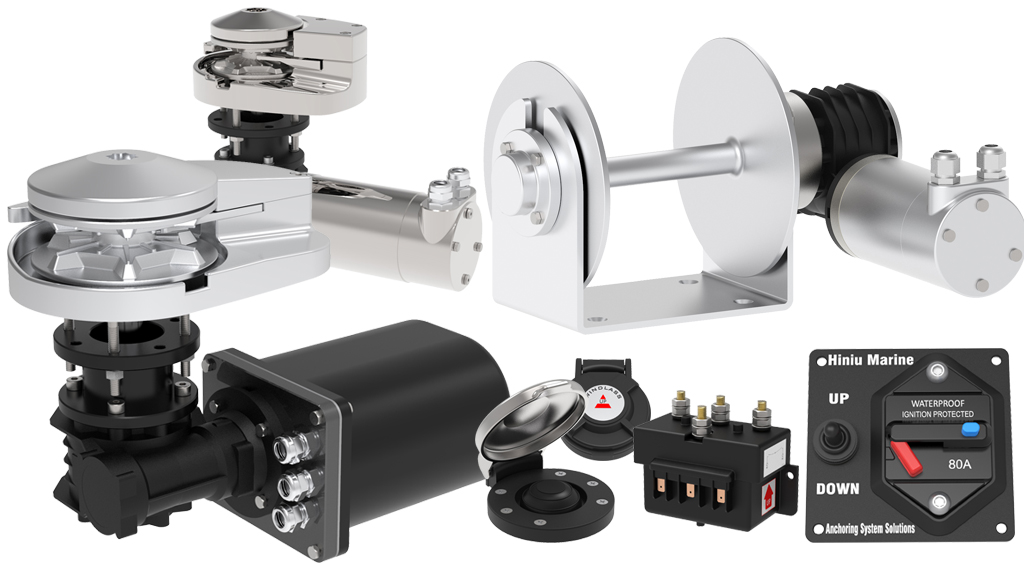
Windlasses come in two basic configurations: horizontal, in which the motor and gypsy are configured horizontally, and vertical, in which, you guessed it, the motor and gypsy are configured vertically. There are pros and cons to each setup, and choosing what is best for you depends on your priorities and your boat’s particulars. We’ll look at the key factors in determining what windless is best for your situation.
Vertical VS Horizontal Windlasses: Which Windlass is Best for You?
Vertical Windlasses are the most popular style, because they have a lower and less obtrusive presence on your foredeck. More of the low-profile unit is hidden below deck and out of the wettest environment. Vertical windlasses generally require a larger hole for the motor, which hangs below the deck. Suitable for boats with larger chain lockers; they often require a longer fall for the chain. The rode makes a full 180° wrap around the gypsy, providing added security, and feeds through a deck pipe to the anchor locker, making a 90° turn.
Horizontal Windlasses: most of the self-contained windlass is located on deck. You only need to drill holes in the deck for the chain pipe, wire and thru-bolts. Installation is easier than with vertical windlasses. Horizontal models are good for boats with small or unusually shaped chain lockers, usually needing a minimum fall of only 12″. The anchor rode enters the gypsy and makes a 90° turn as it feeds down into the locker. Very large yacht windlasses and most manual windlasses are also horizontal. Side-to-side alignment of horizontal windlasses is critical since they cannot accept rodes leading from off-center angles.
Anchor Locker Size
A horizontal windlass requires less anchor locker space than a vertical one. With a horizontal configuration, a minimum fall of 12 inches above the rode pile is enough room for gravity to pull the rode into the locker, whereas a vertical configuration requires 18 inches. If you have a small anchor locker, this may be the deciding factor for you.
Installation and Maintenance
Horizontal windlasses are installed completely above the deck; therefore, installation is straight-forward and access for maintenance is easy. On the other hand, this means that the motor is more exposed to the elements. With vertical windlasses, the motor is below deck, so you don’t have to worry about the weather, but you may have to worry about corrosion in the damp conditions of your anchor locker. Also, since the vertical windlass is partly below the deck, installation and access for service is more difficult.
Location and Ground Tackle Arrangement
Other important considerations when choosing your windlass configuration are mounting location and anchor setup. A horizontal windlass needs to be mounted very precisely with respect to the bow roller since the rode must be directly in line with the gypsy, which may necessitate mounting the windlass off-center. By contrast, a vertical windlass has a much wider range of feed. This is especially important if you have two bow rollers, and want to use your windlass with both (i.e. one at a time), since it will accept both rode angles.
Additionally, deck space and arrangement should be a consideration. Horizontal windlasses require more deck space that vertical ones, possibly leading to clutter, even injury. Some boaters have claimed that banging their knee once on a horizontal windlass was enough to make their decision for them. If you have a lot of deck space, or an out-of-the-way location available, this may not be a concern for you.
Appearance
Quite simply, horizontal windlasses are not as good-looking as vertical windlasses, since much of a vertical windlass is below the deck. If looks are a priority, you may want to consider the vertical configuration.
Winding Up
The decision to go with a horizontal or a vertical windlass depends on several factors. Which one you choose depends on your anchor locker size, installation and maintenance priorities, placement and ground tackle requirements, and appearance concerns.